

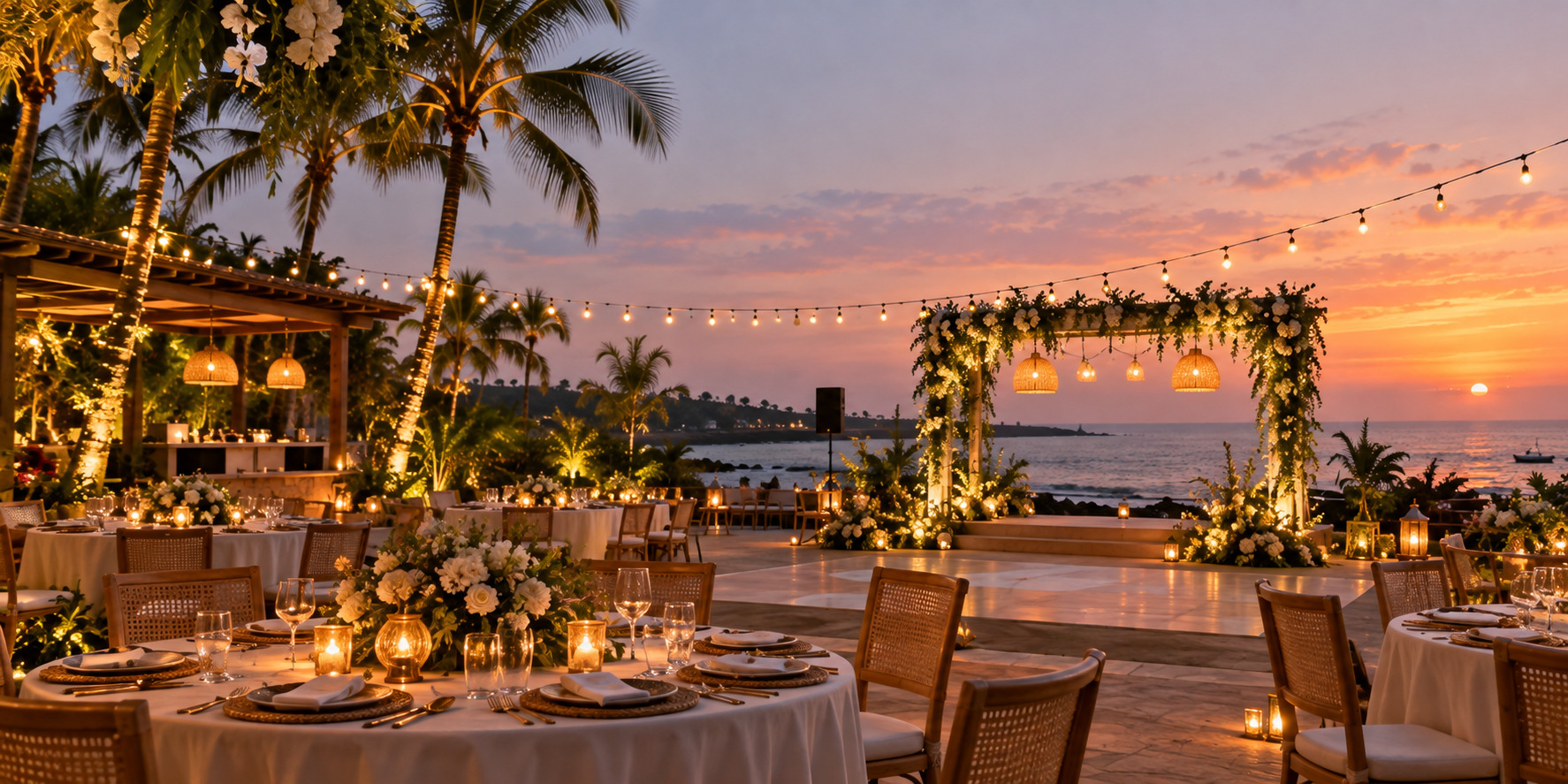
A wedding reception in Goa can make the most of sea views, palm-lined gardens and open-air venues. Yet a beautiful setting is only part of the experience. Guests also need comfortable seating, clear routes between event areas and lighting that works after sunset. The most practical approach is to plan decor, lighting and guest movement together. These ideas will help you create a reception that looks natural and runs smoothly without filling every corner with decorations.
Choose Decor That Suits the Venue
Start with the space you have booked. A beachfront resort, a garden lawn and a covered courtyard will each need a different layout. Visit the actual event area before approving a design. Check the view from guest tables, the distance to the stage and whether the venue has rules for temporary structures. A setup that looks lovely in a photograph may not work as well in a narrow outdoor space.
Let the Natural Setting Stand Out
For a beach or garden reception, keep the main view open. Light fabric, a few floral arrangements and simple table settings can create a welcoming atmosphere. Avoid placing large decorative walls where they block the sea or make walkways narrower. If the venue already has attractive trees or architecture, highlight those features rather than covering them.
Keep Colours and Materials Simple
White, sand, pale green and soft blue can suit a coastal setting, but there is no fixed colour rule. Choose shades that also work with the venue’s furniture and the time of day. Ask your decorator about rented furniture, reusable structures and flowers available during your wedding season. These choices may reduce unnecessary transport and avoid buying items that will only be used once.
Create One Clear Photo Spot
A single, well-placed photo area is often more useful than several elaborate backdrops. Choose a spot with enough room for group photographs and a clear path for other guests. For an outdoor setup, discuss wind, ground conditions and any installation permissions with the venue before fixing its location.
Plan Lighting for Comfort and Atmosphere
Lighting should support both the photographs and the way people use the venue. Think of it in layers. Soft overhead lighting can help define the dining space, while discreet lamps can make stairs, entrances and paths easier to see. Give the stage and dance floor their own lighting so they do not overpower the seating areas.
Use Warm Light Where Guests Gather
Warm, gentle lighting can work well around dining tables and lounge seating. Keep stronger colours or moving lights mainly around the performance area. Ask the lighting team to test the setup after dark. A daytime site visit alone will not show where shadows fall or where guests may struggle to see.
Prepare for Outdoor Conditions
Coastal wind can affect light fabric, hanging decorations and open-flame candles. Where the venue permits them, well-secured fixtures and battery-powered candles are practical alternatives. Check that lighting cables are covered, equipment is protected from weather and an indoor backup is available when needed. Never let decorative lights become an obstacle on a guest route.
Check Sound Rules Before Setting the Schedule
Music is a major part of many receptions, but the venue’s sound policy should shape the programme. India’s noise rules generally restrict the use of outdoor loudspeakers between 10 pm and 6 am, with limited exceptions. Written permission is generally required. Confirm the rules that apply to your venue with the venue manager and relevant authority. If you want dancing later in the evening, discuss a suitable permitted indoor option early.
Design Guest Flow Before Finalising Seating
Imagine the event from a guest’s point of view. Where will they arrive? Can they find the welcome desk, seating, food and washrooms without asking several people? Walk this route with the venue team. Look for narrow turns, steps and places where people may stop for photographs. Keep access for staff and emergency exits clear.
Connect the Teams With One Layout
A good floor plan should show tables, the stage, speakers, decorative structures and the main walking routes. Share the same version with the decorator, production team, caterer and hospitality staff. For couples planning from another city, teams such as WedMyDay can be part of this coordination, helping bring vendor and guest arrangements into one plan. The important point is that everyone works from the same approved layout.
Give Different Groups Their Own Space
Not every guest wants to stand close to the music. Leave a quieter seating area away from the speakers and dance floor. Check that older guests can reach it comfortably. If families are arriving with children, consider where they can sit without blocking the main performance area.
Keep Dining Routes Easy to Follow
Food counters, bars and photo spots can quickly attract queues. Ask the caterer whether two smaller serving points would work better than one crowded counter. Place them where people can approach and leave without crossing the stage entrance or narrow paths. Keep water stations and washrooms easy to locate.
Make the Evening Feel Seamless
A reception often moves from welcome drinks to photographs, dinner and dancing. Build a simple running order, then check how guests will move between those parts. A short announcement, an usher or a gentle lighting change may be enough. Allow extra time if dinner is in a different space, guests need transport or performers need to reset the stage.
Before the reception, hold one joint walkthrough with the venue representative, decorator, sound and lighting teams, caterer and guest coordinator. Confirm the stage position, power supply, equipment routes, service access and rain backup. Where a setup extends onto a beach or outside a licensed venue, ask which event permissions apply instead of assuming that a resort booking covers everything.
Quick Goa Reception Checklist
- Walk through the event space and approve a layout that keeps the best views open.
- Choose simple decor and confirm which structures the venue allows.
- Test lighting after dark, especially on steps and guest pathways.
- Confirm sound permissions, permitted timings and a weather backup.
- Keep dining, seating and photo areas clear of bottlenecks.
- Share one final layout and schedule with every event team.
Final Thoughts
For a reception with several suppliers or different event spaces, coordination needs extra attention. A wedding planner in Goa can help families review venue requirements, supplier schedules and guest movement, particularly when they are organising everything from outside the state. Whether you work with a planner or manage the details yourself, make sure each team understands what the others need.
The most inviting Goa receptions do not need excessive decor or complicated lighting. They make good use of the venue, keep guests comfortable and allow the celebration to unfold naturally. Plan the space carefully, check the practical details and let the setting remain part of the experience.